 Reviews

 Proudly American

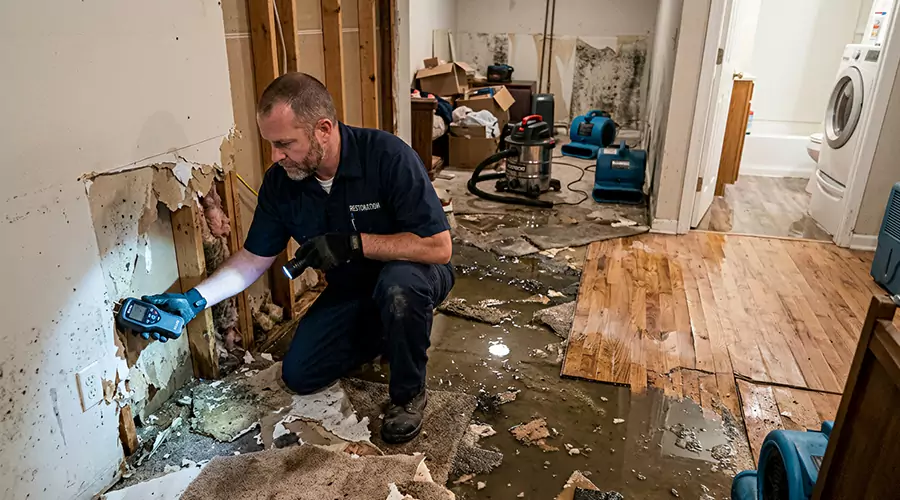
Water damage is divided into three categories based on the level of contamination in the water: Category 1, Category 2, and Category 3. The ANSI/IICRC S500 standard uses these categories to help determine safe handling methods and which affected materials may be cleaned or removed during emergency water damage restoration.
The category does not describe how much water entered the property. A small sewage backup can be Category 3 while a large broken supply line can begin as Category 1.
What Do Water Damage Categories Mean?
Water damage categories describe the contamination conditions associated with a water loss. The source matters first, but conditions can change after water contacts dirty materials or remains in a building. Correct classification affects cleanup methods and material decisions.
The three categories are:
| Category | General Description | Common Examples |
|---|---|---|
| Category 1 | Water from a sanitary source | Supply-line leak or clean sink overflow |
| Category 2 | Significantly contaminated water | Some appliance discharge or contaminated overflow |
| Category 3 | Grossly contaminated water | Sewage or contaminated surface flooding |
A category of water loss should be evaluated based on the actual source and conditions rather than water color alone.
What Is Category 1 Water Damage?
Category 1 water begins from a sanitary source and does not pose substantial contamination risk at the point of release. A broken drinking-water line is a common example. Fast extraction often creates a better chance of drying affected building materials instead of removing them.
Examples can include:
- Broken water supply lines
- Overflowing clean sinks
- Clean bathtub overflows
- Water heater failures
- Some clean appliance supply-line leaks
Category 1 water damage should still be addressed quickly. Water can collect contaminants as it moves through flooring or wall assemblies. Time also matters because prolonged moisture can support mold growth. The EPA recommends drying water-damaged materials within 24 to 48 hours when possible.
What Is Category 2 Water Damage?
Category 2 water contains significant contamination and requires more caution than sanitary water. Contact with detergents or biological material can change the cleanup approach. Some materials that might be dried after a Category 1 loss may need closer evaluation.
Examples may include certain:
- Washing machine discharges
- Dishwasher overflows
- Toilet overflows without fecal matter
- Water that has picked up significant contamination
The source alone should not be used without considering what the water contacted afterward.
For example, initially clean water that moves through dirty carpet or contaminated building materials can deteriorate in quality. Temperature and time can also affect conditions.
What Is Category 3 Water Damage?
Category 3 water is grossly contaminated and can contain harmful biological or chemical contaminants. Sewage is one of the clearest examples. Water from certain outdoor flooding events can also fall into this category because it may contact waste or other environmental contamination.
Common Category 3 situations include:
- Sewage backups
- Toilet overflows containing fecal matter
- Contaminated river flooding
- Surface water carrying waste
- Some groundwater intrusion events
Porous materials exposed to this water are harder to clean safely.
A category 3 water loss therefore requires very different material decisions from a broken clean-water pipe.
Are Water Damage Categories the Same as Water Damage Classes?
No. Categories describe contamination while classes describe the amount of water absorption and the drying challenge. A water loss can therefore have both a category and a class because the two systems answer different questions.
The basic distinction is:
| Classification | What It Describes |
|---|---|
| Category | Contamination level |
| Class | Amount of absorption and drying difficulty |
For example, a small contaminated sewage event could be Category 3 without being the largest drying project. Confusing category with class can make discussions about water damage unnecessarily difficult.
Can the Category Change After the Water Loss Begins?
Yes. Water quality can deteriorate as conditions change. Clean water can contact contaminated materials after moving through a building. Stagnation and warmer conditions can also contribute to worsening contamination. This means the source tells only part of the story. A clean pipe may break upstairs and release sanitary water. That water can later travel through dirty construction materials before collecting on the floor below. The final classification should reflect the conditions present during assessment rather than simply the condition at the original pipe.
How Does the Category Affect What Can Be Saved?
Lower-contamination water generally gives more materials a chance to be dried when the response is fast. Higher contamination makes porous products harder to retain because water can penetrate below the accessible surface.
Material decisions may differ for:
- Carpet padding
- Drywall
- Insulation
- Wood flooring
- Upholstered materials
Hard nonporous surfaces are generally easier to clean than absorbent materials.
The category also affects protective measures during water damage clean up.
What Can You Safely Check Yourself?
You can identify the likely water source without touching standing water. Look for a broken supply connection or an overflowing plumbing fixture from a safe location. Knowing whether sewage or outdoor floodwater is involved provides an important first clue.
Use this basic check:
- Identify where the water originated.
- Avoid contact with unknown wastewater.
- Note what materials the water crossed.
- Record how long the area has been wet.
- Photograph visible conditions when safe.
Do not enter standing water when electrical equipment may be energized.
When Should You Call a Professional?
Professional assessment is appropriate when the contamination category is unclear or sewage is involved. Large water losses also benefit from moisture mapping because water may have spread farther than the visible wet area.
Consider professional help when:
- Sewage is present.
- Outdoor floodwater entered the building.
- Electrical components became wet.
- Several rooms are affected.
- Water entered wall cavities.
- Insulation is saturated.
- The source cannot be identified.
Category 3 water mitigation requires greater contamination control than ordinary clean-water extraction.
How Can You Limit Future Water Damage?
Early detection reduces the time water has to move through building materials. Inspect common leak points regularly and respond quickly when water appears.
Useful habits include:
- Check beneath sinks monthly.
- Inspect appliance supply hoses several times a year.
- Test sump pumps before storm season.
- Use leak alarms near water heaters.
- Investigate unexplained water use.
- Correct plumbing leaks promptly.
Conclusion
Water damage categories describe contamination rather than the amount of water present. Category 1 begins with sanitary water while Category 2 contains significant contamination. Category 3 represents grossly contaminated water such as sewage. The category can change as conditions develop, so the source and affected materials both matter. If contamination is unclear, avoid direct contact and have the loss evaluated before cleanup begins.
Frequently Asked Questions
How many water damage categories are there?
There are three categories. They range from sanitary Category 1 water to grossly contaminated Category 3 water.
Is Category 1 water always safe to clean yourself?
Not necessarily. Electrical hazards or a large affected area can make even sanitary water unsafe to handle without proper precautions.
Is gray water Category 2?
The term gray water is commonly used for Category 2 contamination. The formal classification is based on actual contamination conditions.
Is sewage always Category 3?
Sewage is treated as grossly contaminated water and falls into Category 3.
Can Category 1 become Category 2?
Yes. Water quality can deteriorate after contact with contaminants or as conditions change.
Is Category 3 the same as Class 3?
No. Category 3 describes contamination while Class 3 refers to a high evaporation load and drying difficulty.